
Why Emotional Literacy Matters in Early Childhood
Helping children understand their feelings—one word, one color, and one meaningful conversation at a time.
A child cries because their favorite toy breaks. Another freezes when it’s time to join a group activity. A preschooler gets upset because a game doesn’t go the way they expected.
To an adult, these moments may appear small. To a child, the feelings can be enormous. Children experience emotions long before they have the words—or the strategies—to explain them.
Emotional literacy begins when we help children notice, name, and communicate what they’re feeling. It doesn’t require a perfect lesson plan. Sometimes it starts with a simple question: “How does your heart feel today?”
What Is Emotional Literacy for Kids?
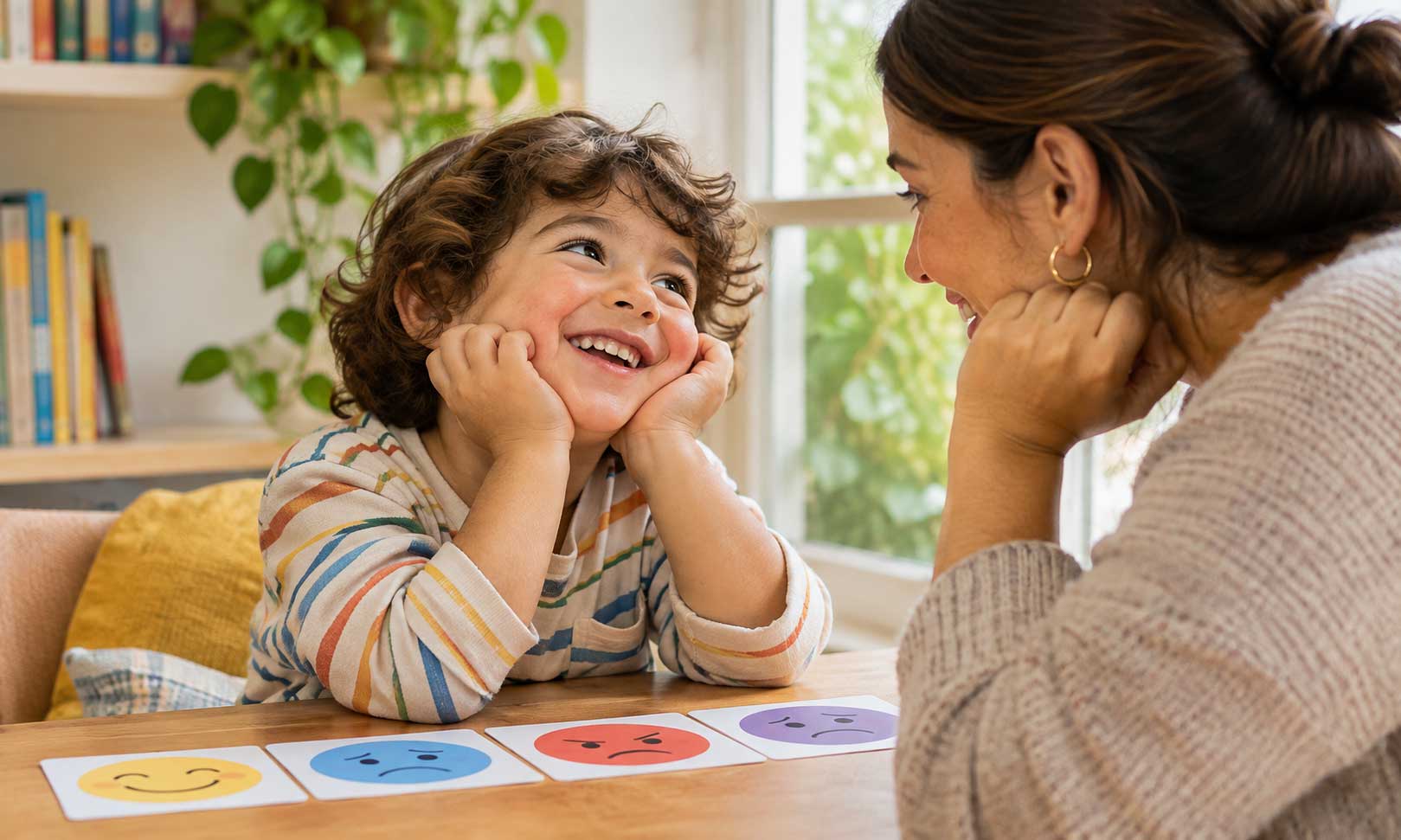
Emotional literacy is the developing ability to recognize, understand, describe, and communicate emotions. For young children, it may look like pointing to a feeling face, saying “I’m frustrated,” or drawing something they cannot yet explain aloud.
It overlaps with social and emotional learning (SEL). The CASEL framework identifies self-awareness and self-management as core competencies, alongside social awareness, relationship skills, and responsible decision-making.
At Mananas, this learning is approached through
color, symbols, bilingual language, and meaningful play
.
These are invitations to explore emotions, not a test
of whether a child gives the “correct” answer.
Four Reasons Emotional Literacy Matters in Early Childhood
1. Children gain language for big feelings
Young children may cry, yell, withdraw, or cling to an adult when they cannot express what is happening. Naming emotions gives them more ways to communicate: sad, disappointed, nervous, excited, frustrated.
“You seem disappointed that playtime ended. Is that how you’re feeling?”
Why it helps:The adult offers vocabulary while leaving room for the child to disagree: “No, I’m angry!” That correction is useful communication, too.
2. Naming feelings creates opportunities to practice regulation
Emotional regulation is not emotional suppression. Feeling angry does not mean a child is misbehaving; hitting someone because of anger still requires a clear limit.
Young children often need co-regulation— support from a calm, responsive adult—before they can try a coping strategy.
A helpful sequence is to notice the feeling, offer connection, set a safe boundary, and explore a next step when the child is ready. A child who is overwhelmed may not be ready for questions or breathing exercises immediately.
For a gentle starting point, families can explore The Calm Explorer , a bilingual printable activity from The Mananas Studio.
3. Conversations about emotions help children consider others
Picture books are useful conversation starters because children can discuss a character before they are ready to talk about themselves.
Ask: “How do you think they feel?” “What happened?” “What could a friend do?”
These questions offer opportunities to practice perspective-taking. They also reinforce an important distinction: understanding another person’s feelings doesn’t mean approving every behavior.
4. Responsive adults make the learning meaningful
The Center on the Developing Child at Harvard University describes the importance of responsive back-and-forth interactions—often called serve and return— in early development.
When a child points, speaks, or asks about a picture, an attentive adult can respond and build on that moment.
A book, a drawing, or a short conversation during breakfast can become an opportunity to practice emotional language. The relationship is not a decorative extra; it’s central to the interaction.
How Emotional Understanding Changes Between Ages 3 and 8
These age ranges are flexible illustrations rather than diagnostic milestones. Language, temperament, culture, disability, and personal experience all influence how a child communicates feelings.
Five Emotional Literacy Activities for Kids
These screen-free ideas are designed to fit into ordinary family or classroom routines. They are educational prompts—not psychological assessments or clinical art therapy.
☀️ 1. The Feelings Check-In
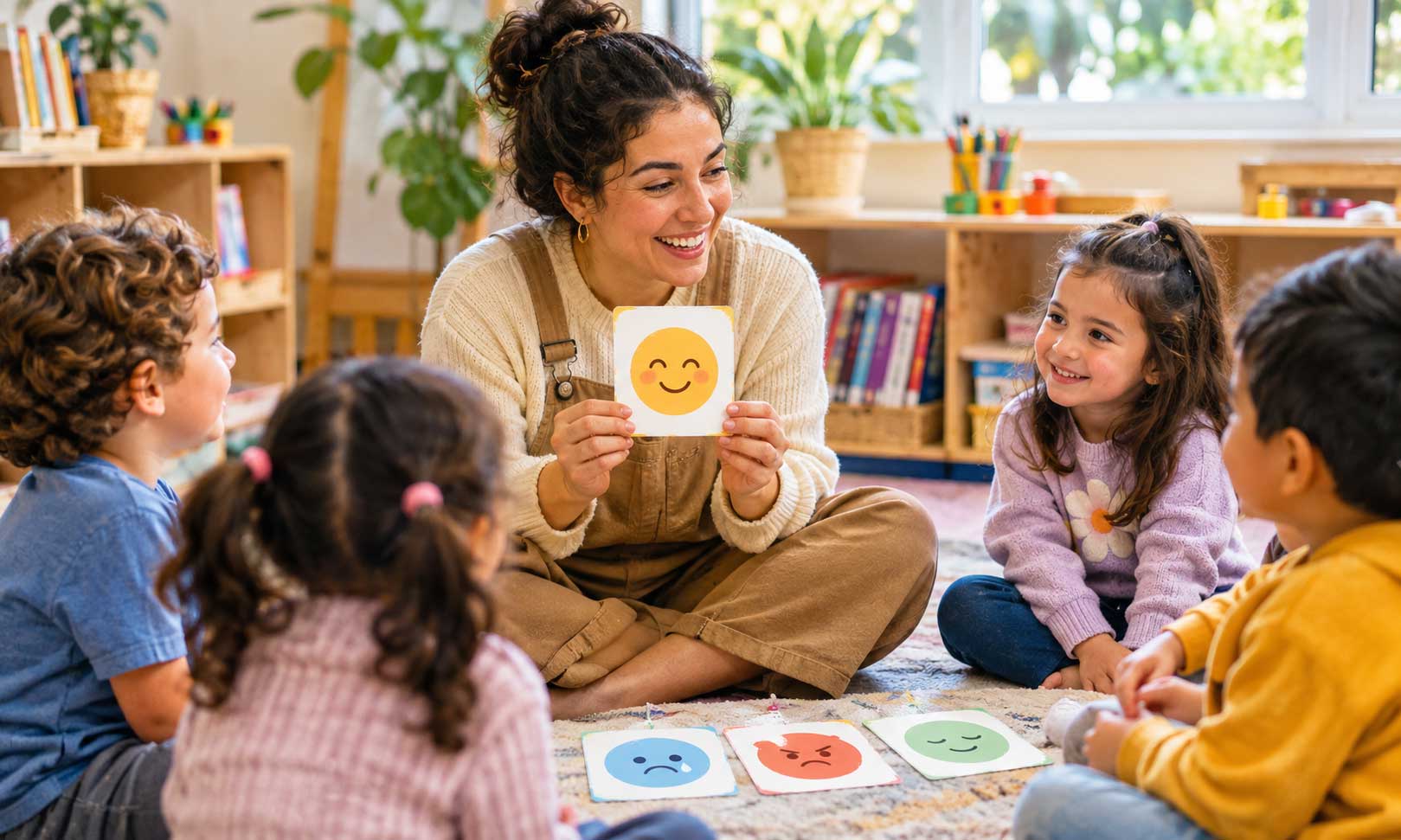
Ask, “Which feeling would you choose for today?” Offer words, pictures, or a chance to point. Follow with “Want to tell me more?” Respect a child’s choice not to talk.
🎨 2. Draw Your Feeling
Ask, “If your feeling were a color or shape, what would it look like?” Avoid interpreting the drawing for the child. Red does not always mean anger; blue does not always mean sadness.
Looking for a printable starting point? Visit The Mananas Studio for bilingual creative activities.
📖 3. Pause During Storytime
Stop at a moment when a character has a strong feeling. Ask what the character might feel and why. Accept more than one interpretation and keep the story enjoyable.
The Rainbow of Feelings Collection Vol. 1 offers bilingual stories about happiness, sadness, and calm as conversation starters.
🫶 4. Notice Body Clues
Talk about how feelings can come with bodily sensations: butterflies in the tummy, warm cheeks, or an urge to move.
Ask children what they notice; don’t suggest that everyone feels an emotion the same way.
🌱 5. What Could Help?
Try: “Your drawing tears and you feel upset. What might help?”
Explore several options—asking for help, taking a pause, repairing the page, or trying again later. When feelings run high, help the child settle before problem-solving.

Emotional Literacy in Bilingual Families
Emotions aren’t limited to one language. A child may use Spanish for comfort and English at school—or mix the two.
Families can respond in the language that feels natural and understandable, without turning emotional conversations into vocabulary quizzes.
For example, a child might say, “Estoy triste.” An adult could answer: “You’re feeling sad. ¿Quieres contarme qué pasó?”
The aim is connection and usable words, not perfect translation.
This bilingual, relationship-centered approach is part of why Mananas was created : to make emotional exploration accessible through stories, color, and meaningful shared time.
What Parents and Educators Can Do Differently Tomorrow
Start small. Choose one moment in the day—a morning greeting, a transition, or storytime—and invite children to notice a feeling.
Model your own emotional language without expecting children to manage adult concerns: “I’m frustrated, so I’m taking a moment to reset.”
In classrooms, offer visual feeling choices, predictable routines, and space for supported calming. The National Association for the Education of Young Children (NAEYC) describes educator-supported emotional check-ins and comfort spaces as practical strategies.
Teachers, homeschool families, and early childhood programs can also visit Mananas for Educators to explore classroom-oriented bilingual emotional learning resources.
Every Feeling Deserves to Be Understood
Children do not need to describe every emotion perfectly. They need repeated chances to notice what they feel and adults who listen, respond, and help them practice safer ways to express themselves.
Sometimes the most useful learning moment is beautifully ordinary: a child, a caring adult, a colorful page—and the question, “How does your heart feel today?”
One feeling. One color. One shared moment.
Explore The Rainbow of Feelings Collection Vol. 1, featuring bilingual stories about happiness, sadness, and calm. Or start with free, printable emotion activities.
Explore the Book Collection Discover Free ActivitiesResearch & Further Reading
- Collaborative for Academic, Social, and Emotional Learning (CASEL). (2020). CASEL’s SEL Framework. View source .
- Center on the Developing Child at Harvard University. A Guide to Serve & Return. View source .
- Center on the Developing Child at Harvard University. (2019). How-to: 5 Steps for Brain-Building Serve and Return. View resources .
- National Association for the Education of Young Children (NAEYC). (2021). “How Are You Feeling?” Strategies for Helping Children Understand and Manage Emotions. View source .
Educational note: This article provides general educational information and does not offer diagnosis or treatment. Mananas books and activities have not been clinically validated as therapeutic interventions. Consult a qualified professional if you have concerns about a child’s emotional or behavioral development.







Review Why Emotional Literacy Matters in Early Childhood.