

From the Inside Out: Helping Children Understand Themselves and Build Emotional Confidence
How self-awareness, emotional expression, healthy boundaries, and supportive relationships help children find their voice.
Imagine a child who knows every letter of the alphabet but struggles to say, "I need help."
Another child knows how to count to one hundred, yet finds it difficult to tell a friend, "I don't like that."
A third child feels proud of something they created but quickly changes their mind when another child laughs.
These are ordinary examples of how complicated growing up can be.
Children are constantly learning about the world around them. But they are also learning about a world that is much harder to see: the world inside themselves.
Their feelings. Their preferences. Their strengths. Their worries. Their boundaries. Their voice.
Helping children understand that inner world is one important part of developing emotional confidence.
Emotional Confidence Begins With Self-Awareness
Emotional confidence does not mean feeling brave all the time, always knowing what to say, or never feeling insecure.
It means gradually developing a sense that your feelings and needs are worth recognizing and communicating.
For children, this begins with questions such as:
- What am I feeling?
- What do I enjoy?
- What makes me uncomfortable?
- What am I proud of?
- What do I need right now?
- Who can help me?
The CASEL Social and Emotional Learning Framework identifies self-awareness as a core social-emotional competency.
It includes understanding emotions, strengths, thoughts, personal values, and aspects of identity.
As children grow, these abilities can help them develop a more grounded understanding of themselves.
Instead of asking only "How was your day?", explore a different question:
"What was something you felt proud of today?"
Or simply: "What was something important to you?"
Understanding feelings is part of the foundation. Our Emotional Literacy article in The Mananas Journal explores how children begin recognizing and naming emotional experiences.
Helping Children Build Confidence Without Demanding Perfection
Adults often want children to feel confident, so we encourage them with positive words.
Encouragement matters. But confidence is not simply hearing "You're amazing" again and again.
Children also need opportunities to try, make mistakes, ask questions, solve manageable problems, and receive support.
A child who says "I can't do it" may need reassurance, a smaller first step, or an adult who stays nearby while they try.
The Center on the Developing Child at Harvard University emphasizes the importance of supportive relationships and opportunities to develop adaptive skills and a sense of personal agency in building resilience.
Emotional confidence grows within relationships; children do not have to develop it alone.
Teaching Children to Express Feelings, Needs, and Opinions
Recognizing an emotion is different from knowing how to communicate it.
A child might know they feel uncomfortable without knowing how to explain what happened.
Give children opportunities to practice short, understandable phrases:
"Me siento triste."
"Necesito ayuda."
"Quiero intentar esto."
"Eso no me gusta."
Children don't always need to use spoken words. Pointing, signing, drawing, communication devices, or asking an adult to help explain can be equally meaningful.
In bilingual families, allow children to express themselves in the language that feels most accessible to them.
Mananas encourages this kind of expression through The Mananas Method , where colors, symbols, and language become starting points for conversation and connection.
Why Healthy Boundaries Matter for Young Children
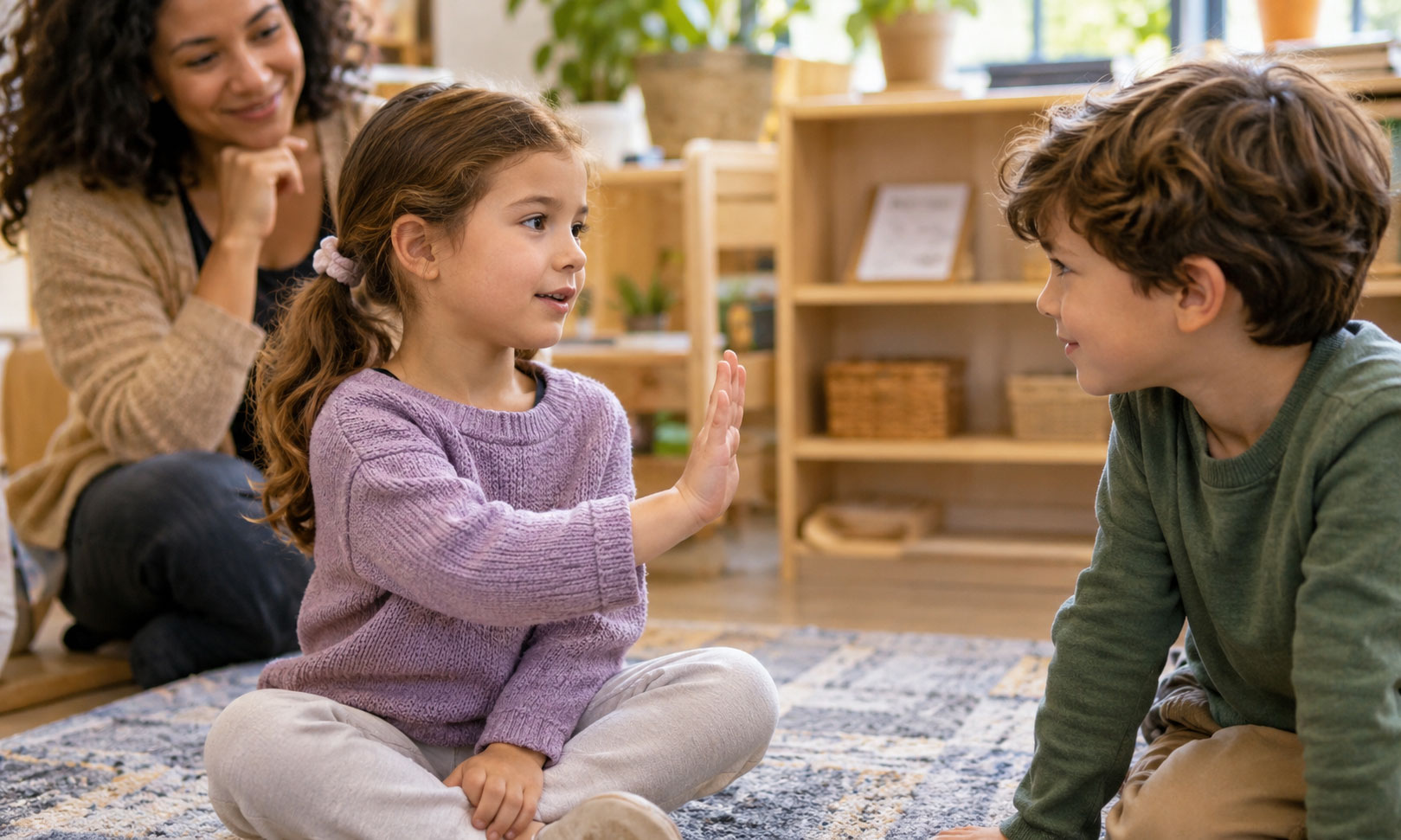
Children can begin learning that their preferences, comfort, and personal space deserve respect.
They can also learn to respect the boundaries of other people.
Everyday experiences offer useful opportunities:
- Asking before borrowing someone's belongings.
- Respecting someone who doesn't want a hug.
- Recognizing that a friend may not want to play the same game.
- Telling a trusted adult when someone behaves in a hurtful or unsafe way.
Adults can model respectful language without teaching children that they must always confront someone to prove confidence.
"Please stop."
"Por favor, para."
"I need some space."
"Necesito espacio."
"Can you help me?"
"¿Me puedes ayudar?"
If a situation feels unsafe, the child should seek adult support rather than being expected to resolve the problem independently.
Helping Children Recognize Conflict, Unkindness, and Bullying
Learning about feelings also means learning how our actions can affect other people.
Children experience disagreements, exclusion, hurt feelings, and difficult friendships while developing social skills.
However, not every disagreement is bullying.
According to StopBullying.gov , bullying includes unwanted aggressive behavior, a power imbalance, and repetition or the potential for repetition.
Young children are still developing their social understanding. Adults need to examine patterns and context rather than labeling children based on isolated incidents.
Children are not responsible for preventing bullying by becoming more confident, speaking more firmly, or behaving differently.
Adults and institutions are responsible for maintaining safe environments and responding to harmful behavior.
Teaching children emotional language and personal boundaries can support communication. It is not a substitute for adult intervention.
Teaching Children When and How to Ask for Help
One of the most valuable skills children can practice is knowing whom to approach when something feels wrong.
A child may feel embarrassed, afraid, uncertain, or worried about getting someone in trouble.
Adults can repeatedly communicate:
The American Academy of Pediatrics and StopBullying.gov recommend listening to children, taking concerns seriously, and involving trusted adults when bullying occurs.
Something feels uncomfortable, unfair, hurtful, or unsafe.
Leave the situation when possible and seek adult supervision.
Explain what happened using words, pictures, or another accessible communication method.
If the first adult doesn't respond adequately, seek another trusted adult.
For example: "Someone keeps calling me names." Or: "I don't feel safe near that person."
Children should never be required to confront someone who has hurt them before they can receive help.
Emotional Confidence, Empathy, and Healthy Friendships
Confidence is not about believing that our feelings matter more than everyone else's.
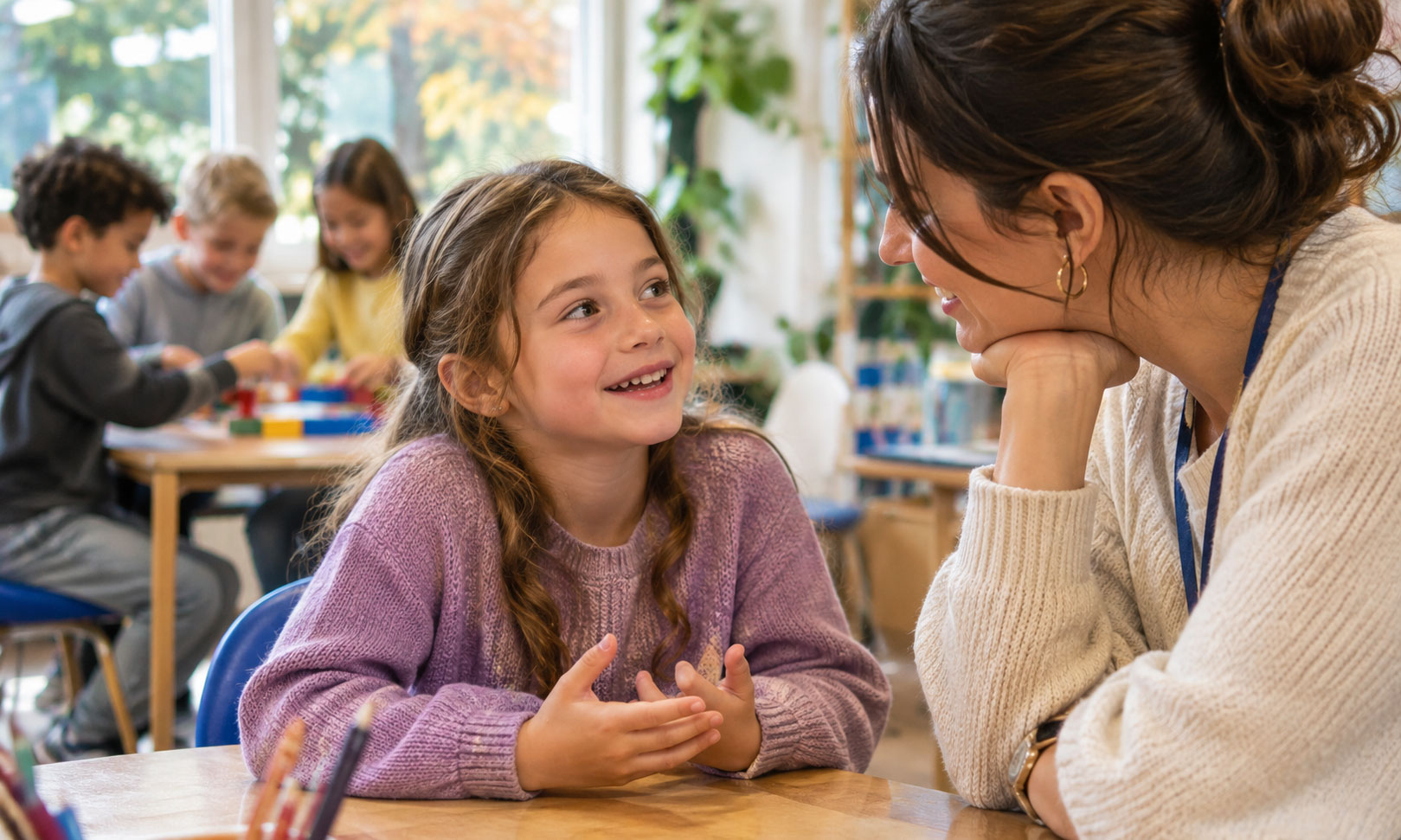
Children also need opportunities to understand other perspectives, practice cooperation, and recognize when someone needs support.
A child can learn to say:
- "I want to play, but I understand you want something different."
- "I didn't mean to hurt your feelings. What can I do now?"
- "That wasn't kind. Let's tell the teacher."
Healthy relationships involve both expressing personal needs and respecting others.
The CASEL framework identifies social awareness and relationship skills as essential areas of social-emotional learning.
For educators, Mananas For Educators offers a starting point for exploring bilingual emotional learning resources for classrooms.
5 Activities to Help Children Build Emotional Confidence
These activities are designed for children ages 3–8. Adapt the language, materials, and expectations to the child's developmental and communication needs.
They are educational conversation starters, not psychological tests or validated bullying prevention interventions.
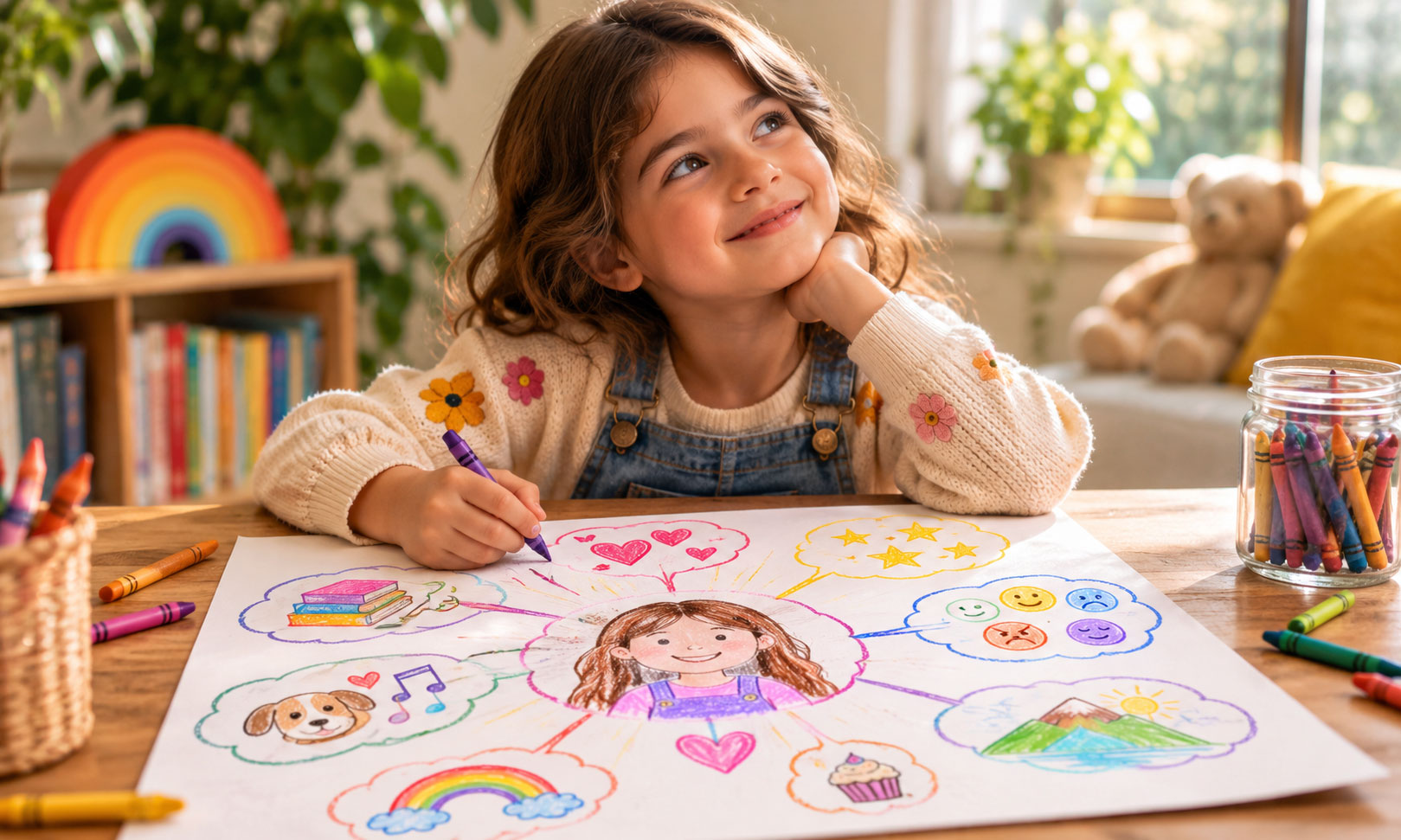
1. My Inner World Map
Invite children to draw themselves in the center of a page.
Around the drawing, add pictures, colors, or words representing things they love, things they do well, feelings they experience, and people who support them.
"¿Qué te hace ser tú?"
Let children choose what they wish to share.
2. My Voice Matters
Present simple everyday situations:
- You don't understand an activity.
- You want to join a game.
- You need a quiet moment.
- Someone is using your belongings without asking.
Invite children to choose words, gestures, or a picture that could communicate their needs.
3. My Boundaries
Use a puppet to introduce situations involving personal preferences and space.
For example: A character doesn't want a hug. Another character wants to borrow a favorite toy.
Practice phrases like "No, thank you," "Please ask first," and "I need space."
4. The Friendship Detective
Create fictional friendship situations.
Some characters cooperate and respect boundaries. Others disagree, exclude, or use hurtful words.
"How might each person feel?"
"Who could help?"
Discuss whether the situation needs a conversation, an adult's help, or an immediate safety response.
5. My Circle of Trusted Adults
Invite children to identify adults who can support them at home, school, and in their community.
Together, create a circle containing names, pictures, or symbols representing those adults.
"¿Quién puede ayudarte cuando algo no está bien?"
Rehearse how to ask for help. Explain that children can tell another trusted adult if someone does not listen or respond.
How Mananas Connects Inner Awareness With Everyday Life
At Mananas, emotional learning begins with a simple idea: children deserve opportunities to understand what they feel.
Our bilingual stories and creative activities use color, illustrations, and meaningful conversations to explore emotions in age-appropriate ways.
Those experiences can become starting points for deeper questions:
- What matters to me?
- What can I ask for?
- How do I respect others?
- What should I do when I need help?
The goal is not to make children emotionally independent before they are ready.
It is to support their growing confidence through caring relationships.
Families can explore The Mananas Studio for bilingual, screen-free activities that encourage creative emotional expression.
These resources are educational tools. Their specific effects on confidence or bullying prevention have not been clinically validated.
From the Inside Out: A Voice Worth Hearing
Every child deserves to feel understood, respected, and supported.
Emotional confidence is not about never feeling afraid, never making mistakes, or always knowing what to do.
It is about growing a stronger understanding of who you are, discovering different ways to express yourself, and knowing that help is available.
When adults make space for children's feelings, listen to their voices, respect their boundaries, and respond to their concerns, emotional learning becomes part of everyday life.
A child does not have to face the world alone to learn how to navigate it.
Little Feelings. Stronger Connections.
Explore bilingual stories and creative activities designed to encourage emotional awareness, self-expression, and meaningful adult-child conversations.
Explore Free Activities Resources for EducatorsResearch & Further Reading
- Collaborative for Academic, Social, and Emotional Learning. (2020). CASEL's SEL Framework. View source .
- Center on the Developing Child at Harvard University. Resilience: A Skill Your Child Really Needs to Learn (and What You Can Do to Help). View resource .
- StopBullying.gov. What Is Bullying. View source .
- StopBullying.gov. Respond to Bullying. View source .
- American Academy of Pediatrics. Why Bullying Hurts All Children— and What Parents Can Do About It. HealthyChildren.org. View resource .
- StopBullying.gov. How to Prevent Bullying. View source .
Educational note: This article provides general educational information, not psychological assessment or treatment. Activities described here are not clinically validated interventions. If a child experiences bullying, ongoing distress, or unsafe behavior, involve responsible adults and appropriate school or healthcare professionals.






Review From the Inside Out: Helping Children Understand Themselves and Build Emotional Confidence.